
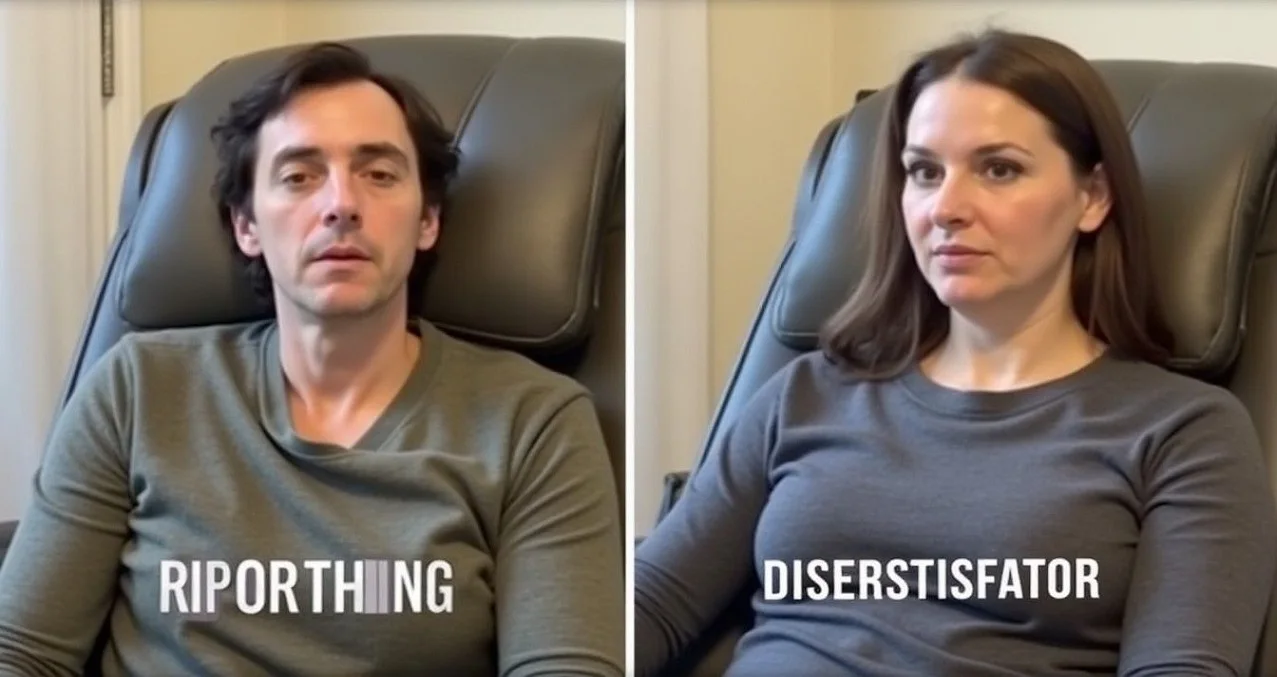
Why Massage Chairs Can Actually Cause Discomfort
You finally did it. After months of sore shoulders and restless nights, you invested in a massage chair. The reviews were glowing. The features seemed endless. You sat down, pressed start, and waited for the relief to wash over you. Instead, something felt… wrong.
Maybe it was a sharp pinching behind your shoulder blade. Perhaps a dull ache in your lower spine that was not there before. Or the next morning, you woke up sore in places you never targeted.
Here is the uncomfortable truth no one tells you: Massage chairs can absolutely cause pain and discomfort. Not always. Not for everyone. But often enough that physiotherapists and chiropractors have names for the patterns they see. This is not an anti-massage chair manifesto. It is a roadmap. Because the problem is rarely the chair itself. It is how we use it.
Why a Machine Designed to Relax You Ends Up Hurting You
Let us start with what a massage chair actually is.
It is a robot. A powerful one. Inside that leather casing are motors, gears, and rollers that exert significant force on your body. Unlike a human therapist, this robot has no eyes. It cannot see your wince. It cannot feel the muscle spasm under its touch. It follows code, not intuition.
This is the fundamental tension. You are trusting a pre-programmed machine to navigate the unique landscape of your body. And bodies are anything but standard.
The discomfort usually falls into five distinct categories. Recognizing which one is happening to you is the first step toward fixing it.
1. The Anatomy Mismatch: When Your Spine Does Not Fit the Track
Massage chairs are designed for an average body. But average is a mathematical concept, not a human one.
The roller track inside the chair—that mechanism that moves up and down your back—is manufactured to a fixed width and curvature. It assumes your shoulder blades are a certain distance apart. It assumes your spinal erectors sit at a standard depth.
If your body deviates from this template, the rollers may track directly over bone instead of muscle.
This is not relaxation. This is a hard plastic mechanism grinding against your vertebrae or the medial border of your scapula. Users describe it as a “pinching” or “scraping” sensation.
Who is most at risk? Very petite individuals, very broad-shouldered individuals, and anyone with scoliosis or atypical spinal curvature.
The fix: Look for chairs with adjustable airbag systems in the shoulder zone. Some newer models allow you to widen or narrow the roller track manually or via settings. If your chair lacks this, a lumbar cushion or rolled towel placed strategically can shift your spine away from the offending roller path.
2. The “More Is Better” Trap: Excessive Intensity and Duration
This is the most common mistake. And it is entirely understandable.
You have pain. The chair feels good. So you crank up the intensity. You extend the session from 15 minutes to 30. You do it two days in a row. Then three.
You have just performed a deep tissue massage on yourself without allowing recovery time.
Here is what happens physiologically. Intense mechanical pressure creates microtrauma in muscle tissue. This is normal. It is how therapeutic massage works. But microtrauma requires time to repair. If you re-injure the tissue before healing occurs, inflammation compounds.
The result is not relaxed muscles. It is bruised, swollen, hypersensitive tissue.
Who is most at risk? Anyone using the highest intensity settings daily, particularly older adults with reduced tissue elasticity.
The fix: Treat the chair like exercise equipment. Limit sessions to 15-20 minutes. Alternate days. Use medium intensity for maintenance and save high intensity for specific, infrequent needs. If you are tender to the touch the next day, you overdid it.
3. The Cervical Spine Danger Zone
The neck is the most vulnerable part of the chair experience.
Most modern chairs have rollers that extend into the occipital region. This can feel incredible when done correctly. When done incorrectly, it is a safety risk.
The cervical spine houses critical arteries and nerves. It is not designed to bear heavy compressive force, especially from a device that cannot distinguish between muscle and vertebral bone.
Users report two distinct neck issues:
Sharp, radiating pain during or immediately after use. This suggests nerve impingement or facet joint irritation.
Dull headache that develops hours later. This often indicates muscle splinting—the neck muscles contracting to protect the spine from what they perceived as a threat.
Who is most at risk? Anyone with pre-existing cervical disc issues, arthritis, or simply a longer-than-average neck where the rollers sit at the wrong height.
The fix: Disable the neck roller function entirely. Many chairs allow this. If yours does not, drape a thick towel over the upper shoulder area to create buffer space. Never allow direct roller contact on the bony prominences of the cervical spine. Stick to airbag compression for the neck instead of rolling mechanisms.
4. Heat Therapy: When Warmth Becomes Inflammation
Heat is advertised as a luxury feature. And it is—until it is not.
Heat increases blood flow. This is beneficial for chronic stiffness. But heat also increases inflammation. If you have an acutely inflamed joint—think a flare-up of arthritis, a fresh strain, or any area that is hot and swollen—adding external heat is like pouring gasoline on a fire.
Who is most at risk? Anyone with active inflammatory arthritis, recent injuries (first 48 hours), or areas that feel hot to the touch even without the chair.
The fix: Use heat only for chronic, non-inflamed stiffness. If an area is painful and warm, skip the heat setting entirely. Some chairs allow independent heat control per zone. Use it.
5. The Zero Gravity Illusion
Zero gravity positioning reclines your body so your legs are elevated above your heart. It reduces spinal load. It is genuinely useful.
But it also changes how the rollers contact your body.
When you recline, your skin and muscles shift relative to the internal mechanism. A roller that tracked perfectly over your erector spinae while upright may now be digging into the edge of your shoulder blade.
Who is most at risk? Anyone who changes position dramatically during a session.
The fix: Program your chair to find the zero gravity position before the massage begins. Do not shift your torso once the rollers are moving. If you feel a new pressure point after reclining, stop and reposition.
What the Experts Say: A Physiotherapist’s Perspective
I spoke with Sarah Chen, a musculoskeletal physiotherapist with 12 years of clinical experience.
“I see at least one patient per month with massage chair-related discomfort,” she told me. “The pattern is almost always the same. They bought a chair, used it enthusiastically, and ignored the early warning signs of pain because they assumed ‘no pain, no gain’ applies to massage. It does not.”
Chen emphasizes that pain is feedback, not a goal.
“If a human therapist hits a tender spot and you flinch, they back off. The chair cannot do that. You have to be the one who says, ‘This hurts, I am stopping.'”
When to Stop Using the Chair Entirely
Discomfort is a signal. Pain is a command.
Stop using the chair immediately and consult a healthcare provider if you experience:
-
Numbness or tingling that persists after the session ends
-
Sharp, shooting pain during use
-
New joint pain that was not present before
-
Bruising that appears the next day
-
Headaches that consistently follow chair sessions
These are not normal. They are not signs you need to “break in” the chair. They are signs your body and the machine are incompatible in their current configuration.
How to Fix the Problem: A Practical Checklist
If your massage chair causes discomfort but you believe it could work for you with adjustments, run this checklist:
1. Reduce everything. Lower intensity. Shorter duration. Fewer sessions per week.
2. Isolate the problem. Turn off features one by one. Try a session with zero heat. Then with rollers off and airbags only. Identify exactly which mechanism triggers the pain.
3. Change your position. Shift slightly left, right, up, or down. Sometimes 2 inches of movement realigns your spine with the track.
4. Use barriers. Towels, foam pads, or aftermarket seat cushions can buffer pressure points.
5. Read the manual. Yes, actually read it. Many chairs have customization settings buried in menus—shoulder width adjustments, roller sensitivity, neck on/off toggles.
6. Consider your body. If you have known spinal issues, consult a physiotherapist before using a chair again. They may be able to recommend specific positioning or identify chairs with appropriate track geometry for your condition. People also search
The Honest Bottom Line
Massage chairs are sophisticated machines. They can deliver genuine therapeutic benefit. But they are not magic, and they are not one-size-fits-all.
Discomfort is not a failure of your body. It is a mismatch between your body and the machine’s assumptions.
The best massage chair users are not the ones who tolerate pain. They are the ones who treat the chair as a tool requiring skill, not a passive entertainment device. They adjust. They listen to their bodies. They stop when something hurts.
If your chair causes discomfort, you have three options: adjust, exchange, or abandon. None of these are admissions of defeat. They are acts of self-preservation. Your body is the only one you get. No massage chair is worth hurting it. Learn more

Buymassager is a certified wellness specialist and health technology reviewer with over 12 years of experience testing therapeutic devices. As someone who personally manages [relevant condition like plantar fasciitis/neuropathy], they bring both professional expertise and real-world insight to product evaluations. Their work has been featured in [Health Magazine/Wellness Blog/Medical Review Site],
0 Comments