
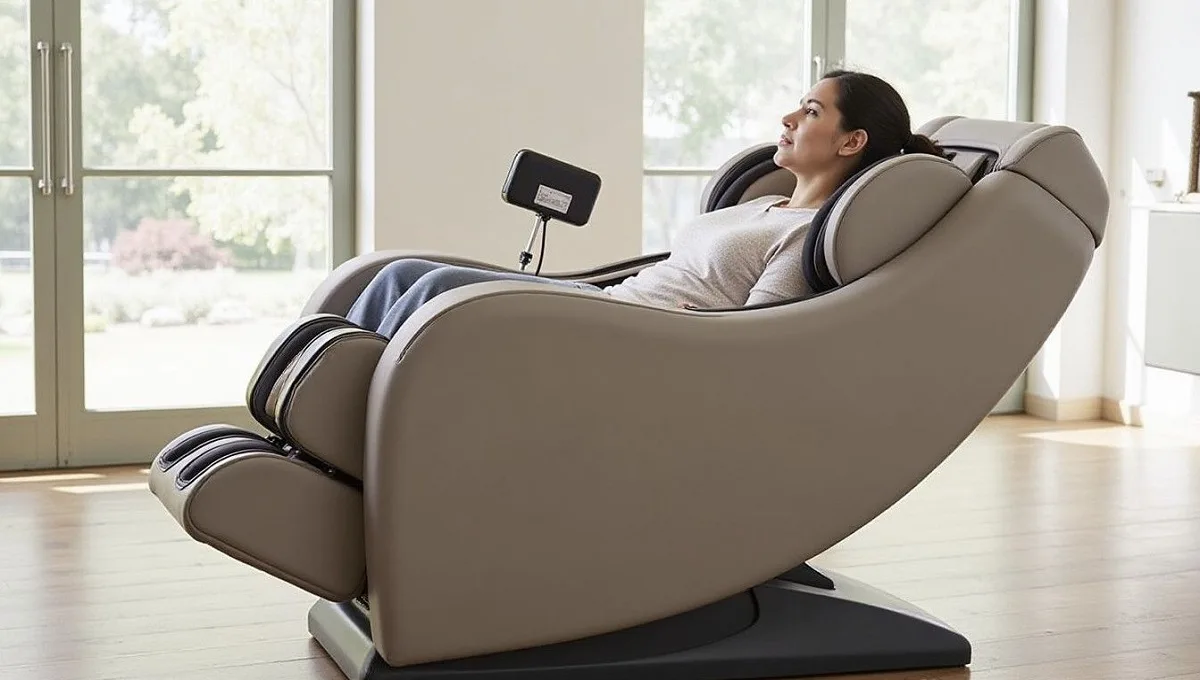
Why Massage Chairs Feel Awkward for Many Users
Massage chairs are often marketed as the ultimate home luxury—promising deep relaxation, muscle relief, and spa-like comfort at the push of a button. With advanced features like zero-gravity recline, body scanning, and heat therapy, they seem like an easy solution for stress and muscle tension.
Yet many first-time users share a similar reaction: “It feels awkward.” Some describe the pressure as unnatural. Others say the movement feels mechanical or poorly aligned with their body. While massage chairs can be beneficial, the awkward sensation is more common than many expect.
Understanding why this happens can help you make better decisions about your wellness routine—and set realistic expectations before investing in one.
1. The Body Is Not Symmetrical
One of the primary reasons massage chairs feel awkward is simple: human bodies are not perfectly symmetrical.
Most chairs are designed around average height and weight ranges. Even with body-scanning technology, they operate along fixed tracks. If your shoulders are slightly uneven, your spine curves differently, or your hips sit higher on one side, the rollers may not align precisely with your muscle groups.
A trained massage therapist can immediately adjust hand placement to accommodate these differences. A chair cannot shift its structure beyond its built-in design.
When rollers press slightly off-target—too high on the neck, too low on the shoulders, or directly on bone instead of muscle—the sensation can feel uncomfortable or unnatural.
2. Mechanical Pressure Feels Different Than Human Touch
There is a major difference between mechanical pressure and manual therapy.
Massage chairs use rollers, airbags, and motors to simulate techniques like kneading and tapping. While impressive, the movement is repetitive and fixed. The pressure may feel abrupt rather than gradual.
In contrast, professional massage techniques such as:
-
Swedish massage
-
Deep tissue massage
-
Trigger point therapy
involve nuanced pressure adjustments. Therapists warm up muscles gradually before applying deeper work. They sense tissue resistance and adjust in real time.
Massage chairs lack that sensory feedback loop. If the intensity is too strong or too sharp, the body may tense up instead of relax—leading to that awkward feeling.3. Fixed Tracks Limit Natural Movement
Most massage chairs operate on either an S-track or L-track system. These tracks guide the rollers along a pre-determined path designed to follow the general curve of the spine.
However, spinal curves vary widely between individuals. Some people have pronounced lumbar curves; others have flatter backs. If the track does not match your anatomy, the rollers may press in the wrong areas.
This misalignment can feel:
-
Too intense on the lower back
-
Ineffective between the shoulder blades
-
Uncomfortable at the base of the neck
Because the track cannot dynamically reshape itself, users may feel like the chair is “missing the spot” they actually want treated.
4. Lack of Real-Time Adjustment
A massage therapist constantly monitors your reactions. If you wince slightly, shift position, or breathe differently, they adapt immediately.
Massage chairs do not read those signals.
While you can manually reduce intensity or switch programs, the machine does not recognize subtle discomfort. It continues its programmed routine regardless of muscle response.
For individuals with tight muscles, injuries, or chronic tension, this lack of responsiveness can create a jarring sensation rather than soothing relief.
5. Body Type Differences Matter
Massage chairs are built within certain height and weight specifications. If you are outside those ranges—either shorter, taller, or broader—the alignment may feel off.
Common issues include:
-
Neck rollers hitting the back of the head
-
Foot massagers squeezing too tightly or too loosely
-
Shoulder airbags pressing on collarbones instead of muscles
Even small misalignments can make the experience feel awkward.
In professional massage therapy, the table height, positioning, and technique are adjusted to fit your body. That customization is difficult to replicate mechanically.
6. Tension Can Increase Before It Decreases
When pressure is applied suddenly or in an unfamiliar way, the body may instinctively guard itself.
Instead of relaxing, muscles tighten defensively. This protective response can make the massage feel harsh or uncomfortable.
With manual therapy, therapists typically begin with lighter strokes to warm the tissue before moving deeper. This gradual progression helps the nervous system shift into a relaxed state.
Massage chairs often begin with noticeable pressure right away, which can startle the body—especially during a first session.
7. Emotional and Psychological Factors
Relaxation is not purely physical. The nervous system plays a significant role.
Human touch provides emotional cues of safety and reassurance. A calm therapist, quiet room, and mindful pacing help the body shift into a restful state.
Massage chairs lack that relational component. The mechanical sound of motors, abrupt transitions between movements, and fixed timing can feel impersonal.
For some users, that absence of human presence contributes to the awkward sensation.
8. Expectations vs. Reality
Marketing often portrays massage chairs as equivalent to professional spa treatments. High-end advertisements highlight deep kneading, stretching programs, and AI body scanning.
When expectations are high, the first session can feel underwhelming—or strange—if the experience doesn’t match the image.
It’s important to view massage chairs as wellness tools rather than therapist replacements. They offer convenience and muscle stimulation, but they do not replicate skilled manual therapy.
Understanding this distinction helps reduce disappointment. People also search
9. When Massage Chairs Work Well
Despite the awkward experiences some users report, massage chairs can still be beneficial.
They may work best for:
-
General stress relief
-
Mild muscle tightness
-
Post-workday relaxation
-
Supplemental use between professional massages
When expectations are realistic, many users appreciate the convenience of daily access.
The key is proper setup—adjusting intensity, positioning correctly, and starting with shorter sessions.
10. Should You Be Concerned?
Feeling awkward during the first few sessions is common. However, sharp pain, numbness, or lingering soreness are signs that the intensity may be too high or the chair is not properly suited to your body.
If you have underlying health conditions, injuries, or chronic pain, consulting a licensed massage therapist or healthcare provider before frequent use is a wise step.
Professional guidance ensures safety and helps you understand what type of pressure your body responds to best. Learn more
Frequently Asked Questions (FAQ)
1. Why does a massage chair feel uncomfortable at first?
Massage chairs can feel uncomfortable initially because your body is adjusting to mechanical pressure. Unlike human hands, rollers apply consistent force along a fixed track. If your muscles are tight or the alignment isn’t perfect, the pressure may feel intense or awkward during early sessions.
2. Is it normal to feel sore after using a massage chair?
Mild soreness can be normal, especially if you use strong settings or haven’t had deep muscle stimulation before. However, sharp pain, bruising, or lingering discomfort is not normal. Reducing intensity and session length usually helps.
3. Why doesn’t the massage hit the exact spot I need?
Massage chairs follow pre-set roller tracks. Even with body scanning technology, they cannot perfectly match every individual’s spine curvature or muscle imbalance. This can make it feel like the chair is “missing” certain tension points.
4. Are massage chairs safe for everyone?
Not always. People with recent surgeries, severe back problems, blood clot risks, or certain medical conditions should consult a healthcare professional before using one regularly. Massage chairs apply firm, repetitive pressure that may not be suitable for all users.
5. Can massage chairs replace professional massage therapy?
Massage chairs can support relaxation and daily muscle relief, but they don’t replace the personalized care of a trained massage therapist. Human therapists adjust techniques in real time based on muscle response and medical history.
6. How can I make my massage chair feel more comfortable?
To improve comfort:
-
Start with lower intensity settings
-
Use shorter sessions (10–15 minutes)
-
Adjust your sitting position carefully
-
Add a thin cushion if pressure feels too strong
-
Gradually increase intensity over time
7. Why do massage chairs feel too strong on my lower back?
The lower back is sensitive, and roller tracks may apply concentrated pressure there. If your lumbar curve doesn’t match the chair’s design, it can feel intense. Lowering intensity or adding slight padding can help.
8. Do massage chairs help with chronic pain?
They may provide temporary relief for mild to moderate muscle tension. However, chronic pain conditions often require professional evaluation and targeted treatment. A massage chair should be considered a supplement, not a primary therapy solution.
9. How often should I use a massage chair?
For most healthy individuals, 3–4 sessions per week of 15–20 minutes is reasonable. Daily use is fine at moderate intensity, but overuse at high pressure can lead to soreness.
10. Are expensive massage chairs less awkward?
Higher-end models often have better body scanning, smoother movements, and more adjustable settings. While they may feel more natural, they still operate mechanically and cannot fully replicate the adaptability of human touch.

Buymassager is a certified wellness specialist and health technology reviewer with over 12 years of experience testing therapeutic devices. As someone who personally manages [relevant condition like plantar fasciitis/neuropathy], they bring both professional expertise and real-world insight to product evaluations. Their work has been featured in [Health Magazine/Wellness Blog/Medical Review Site],
0 Comments