
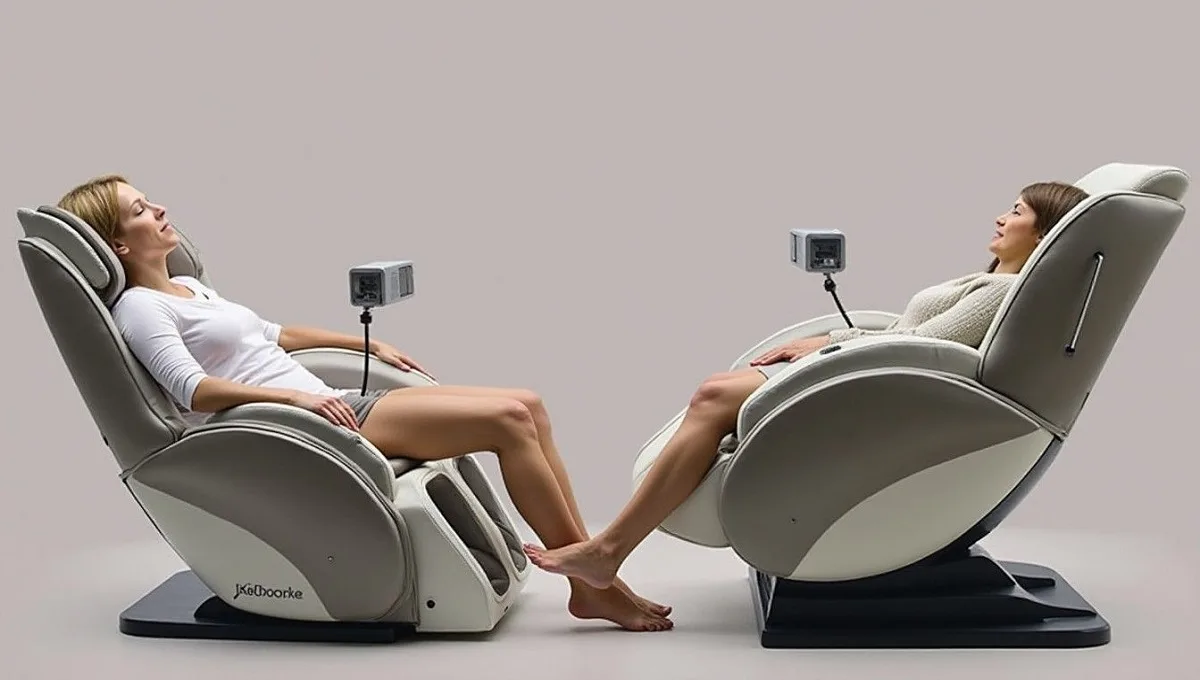
Massage Chairs That Miss the Right Pressure Points
Massage chairs are designed to simulate the feeling of a professional massage, using rollers, airbags, and programmed techniques to target muscle tension. But one of the most common complaints from users is this: “It’s not hitting the spot.”
If you’ve ever felt like your massage chair is close—but not quite right—you’re not alone. Missing the correct pressure points is a frequent issue, and understanding why it happens can help you decide whether adjustments, upgrades, or professional massage therapy might better serve your needs.
Why Pressure Points Matter
Pressure points—often associated with muscle knots or trigger points—are highly specific areas of tension within muscle tissue. In professional settings, therapists often use techniques like:
-
Trigger point therapy
-
Deep tissue massage
-
Sports massage
These approaches require precise hand placement, controlled pressure, and real-time feedback from the client.
The key difference? Human hands can feel exactly where tension is concentrated. Massage chairs cannot.
1. Fixed Roller Tracks Limit Precision
Most massage chairs operate on pre-designed roller tracks, typically S-track or L-track systems. These tracks guide the rollers along a fixed path meant to follow the spine’s general curve.
However, every person’s spine and muscle structure is slightly different. If your tension sits slightly outside the programmed track, the rollers may glide over or beside the tight area rather than directly on it.
Even advanced body-scanning technology only measures height and shoulder position—it does not detect individual muscle knots.
2. Muscle Knots Are Not Always Where You Think
Many people believe their pain originates in one area when the root cause is actually somewhere else. For example:
-
Shoulder pain may stem from tight chest muscles.
-
Lower back tension may relate to tight hips.
-
Neck stiffness may connect to upper back strain.
A licensed therapist assesses these relationships during a session. They may apply pressure in areas you didn’t expect—because they understand muscle chains and compensation patterns.
Massage chairs, however, focus primarily on the back and calves. They cannot analyze underlying causes or adjust focus based on muscular imbalances.
3. Body Size and Shape Affect Alignment
If the chair’s rollers sit too high or too low on your back, they may consistently miss the intended pressure points.
Common alignment issues include:
-
Rollers pressing on bone instead of muscle
-
Neck nodes hitting the base of the skull
-
Lumbar rollers sitting above or below tension areas
Even small mismatches can make a massage feel ineffective or awkward.
This is especially common for individuals outside the average height range the chair was designed for.
4. Mechanical Pressure Lacks Sensory Feedback
A trained massage therapist continuously adjusts pressure based on how the muscle responds. If a knot softens, they adapt. If tissue resists, they slow down.
Massage chairs apply uniform pressure throughout a programmed cycle. They cannot feel resistance, inflammation, or guarding.
Without tactile feedback, it becomes difficult to precisely release stubborn tension points.
5. Trigger Points Require Targeted Attention
True trigger points often need sustained, focused pressure held for several seconds. This technique allows the muscle fibers to release gradually.
Massage chairs typically move continuously along the track. While some models allow spot massage modes, the pressure is still delivered by mechanical rollers rather than nuanced finger or thumb pressure.
As a result, deep knots may remain unresolved.
6. The Difference Between Relaxation and Treatment
Massage chairs are excellent for general relaxation and improving circulation. They can reduce mild tension and promote short-term comfort.
However, targeted muscular treatment—especially for chronic pain—requires evaluation and customization.
When a therapist works on a specific problem area, they may:
-
Change body positioning
-
Adjust table height
-
Use elbows, knuckles, or forearms
-
Apply cross-fiber friction
-
Modify depth gradually
These layered techniques go beyond what a chair can provide. People also search
7. Can You Improve Pressure Accuracy?
If your massage chair consistently misses the right spots, you can try:
-
Adjusting your seating position slightly forward or backward
-
Using the “spot” or “target” mode if available
-
Adding a thin cushion to fine-tune depth
-
Running body scan calibration before each session
-
Lowering intensity to prevent muscle guarding
Small adjustments can sometimes improve alignment.
However, if you frequently feel like it’s never quite right, it may be a limitation of the chair’s design rather than user error.
8. When Professional Massage Makes More Sense
If you experience:
-
Chronic neck or shoulder knots
-
Persistent lower back pain
-
Athletic overuse injuries
-
Limited mobility
Professional massage therapy may be more effective.
A therapist can identify the true origin of tension and apply precise, responsive pressure. Unlike a chair, they can follow muscle fibers, pause when needed, and shift techniques instantly.
Massage chairs are tools. Therapists are trained practitioners. Learn more

Buymassager is a certified wellness specialist and health technology reviewer with over 12 years of experience testing therapeutic devices. As someone who personally manages [relevant condition like plantar fasciitis/neuropathy], they bring both professional expertise and real-world insight to product evaluations. Their work has been featured in [Health Magazine/Wellness Blog/Medical Review Site],
0 Comments