
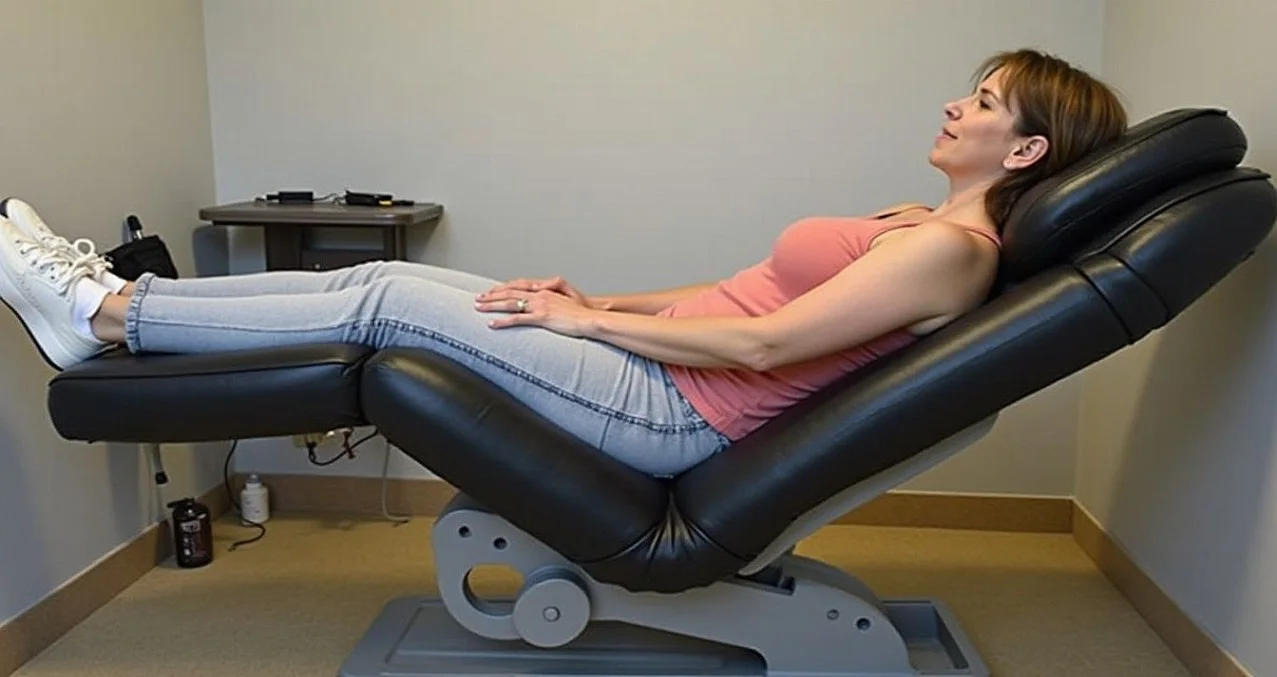
Can Massage Chairs Really Help Support Joint Flexibility?
You know that feeling. You stand up after a long workday, and your knees hesitate. Your lower back speaks before you do. Reaching for something on the top shelf requires a mental preparation that was never there in your twenties.
Joint stiffness is not just a number on the age chart. It is a signal. And increasingly, people are asking whether a massage chair—that leather recliner gathering dust in the showroom—can actually do something about it. The answer, backed by recent clinical studies and robotics engineering, is a clear yes. But the how matters more than the if.
Let us walk through what actually happens inside your joints, what modern massage chairs are now capable of, and whether this belongs in your health routine.
Why Joints Get Stiff in the First Place
Before we talk about solutions, we need to understand the enemy.
Joints are not simple hinges. They are complex intersections of bone, cartilage, synovial fluid, ligaments, and muscles. When everything works well, you move without thinking. When things go wrong, the culprit is rarely the bone itself.
It is almost always the soft tissue around the joint.
Muscles that are chronically tight pull on tendons. Tendons pull on the joint capsule. The joint capsule compresses. Synovial fluid—the oil in your biological hinge—thickens when not moved enough. Movement becomes harder. Pain increases. Movement decreases further.
This is the stiffness cycle. Breaking it requires intervention. This is where massage enters the picture.
What the 2024 Clinical Data Actually Shows
A frequently cited study published by the National Institutes of Health examined office workers suffering from chronic neck and shoulder stiffness. Participants received massage therapy twice weekly for one month.
The results were not subtle.
-
Cervical lateral flexion—the ability to turn your head sideways toward your shoulder—improved by nearly 29 percent.
-
Cervical extension, or tilting the head backward, showed significant measurable gains.
-
Musculoskeletal discomfort scores dropped sharply across the board.
Here is the important part: these results were achieved through manual massage performed by trained therapists. But the mechanical principles are identical to what advanced massage chairs now deliver.
Releasing muscle tension around a joint creates physical space. More space means better range of motion. Better motion means less stiffness. The chair is not healing the joint. It is freeing the joint from the grip of the muscles holding it hostage.
The 2026 Generation: These Are Not Your Father’s Massage Chairs
If your mental image of a massage chair involves vibrating pads and a rolling mechanism that feels like a tennis ball running down your spine, you are behind the curve.
The current generation has more in common with physical therapy equipment than furniture.
Heat That Actually Targets Joints
Stiffness hates warmth. Cold makes synovial fluid viscous. Warmth makes it runny and slippery.
Premium chairs now integrate targeted far-infrared heat directly into joint-specific zones. The GINTELL S5 Pro, for instance, features what the manufacturer calls Thermal Knee Therapy. Intelligent heating elements inside airbags wrap around the knee and calf. Compression and heat work together.
This is not comfort theater. Heated knee wraps have been shown in physiotherapy settings to increase local blood circulation and reduce perceived stiffness. Putting that capability inside a chair you use at home removes the barrier of effort. You do not have to apply a heating pad, wait fifteen minutes, then stretch. You sit down, and it happens.
They Move Your Limbs For You
Here is the feature that did not exist three years ago.
South Korean manufacturer Bodyfriend holds patents on what they call ROVO Walking Technology. The leg rests operate independently. They do not just vibrate or compress. They move.
The chair cycles your legs in a pedaling motion. It performs single-leg stretching sequences. It offers PNF-style stretching—proprioceptive neuromuscular facilitation, a technique physical therapists use to increase range of motion.
The 2025 Bodyfriend 733 model, unveiled at CES, goes further. The arm sections rotate autonomously to stretch shoulder joints and deltoid muscles. You sit. The chair stretches you.
This shifts the device from passive relaxation to active mobility assistance. You are not just being rubbed. You are being moved.
Air Compression and Fluid Drainage
Swollen joints are stiff joints. Excess fluid in the tissues creates pressure and resistance.
Multiple manufacturers now use sequential airbag compression systems. These inflate and deflate in waves, starting at the extremities and moving inward. This mimics manual lymphatic drainage techniques.
The effect is subtle but measurable. Reduced swelling around ankles and knees translates directly to easier movement.
What the Elderly Studies Confirm
The most honest data comes from populations with no placebo susceptibility.
Thai researchers designed a specialized massage chair intervention for elderly individuals with documented joint pain and mobility limitations. Participants used the chair twice weekly for two months.
Clinician ratings showed 80 percent of participants achieved “very good” improvement in muscle and joint movement.
This matters because elderly users are not imagining results. They have chronic, established conditions. If a massage chair can move the needle for this group, the preventive potential for younger, desk-bound users is substantial.
Can It Help Specific Conditions?
Let us address the common questions directly.
Arthritis? Massage chairs cannot reverse cartilage loss or cure inflammatory autoimmune disease. However, they can reduce the muscle spasms and tension that arthritis patients develop as they guard against pain. Looser muscles mean less compensatory stiffness.
Lower back stiffness? This is the strongest application. Most lower back stiffness is muscular, not skeletal. Lumbar heating elements combined with deep tissue rollers directly target the erector spinae muscles. Releasing these muscles allows the lumbar spine to extend more freely.
Knee stiffness? This requires chairs with leg extension capabilities. Basic roller chairs do nothing for knees. Chairs with independent leg cycling and knee airbags are the relevant option here.
Neck stiffness? Virtually all modern chairs address this. The roller track now extends into the occipital region. Some chairs include specialized neck airbags that cradle and traction the cervical spine.
What Massage Chairs Cannot Do
Clarity prevents disappointment.
A massage chair will not regrow articular cartilage. It will not cure rheumatoid arthritis. It will not replace post-surgical rehabilitation. It will not correct structural deformities. people also search
It also requires consistency. Using a chair once per month delivers temporary relaxation, not lasting flexibility improvement. The Thai elderly study used two sessions per week. The NIH office worker study used twice weekly. This is the dosage that produced measurable results.
Think of it like exercise. One perfect workout does nothing. Regular, imperfect consistency changes everything. Learn more

Buymassager is a certified wellness specialist and health technology reviewer with over 12 years of experience testing therapeutic devices. As someone who personally manages [relevant condition like plantar fasciitis/neuropathy], they bring both professional expertise and real-world insight to product evaluations. Their work has been featured in [Health Magazine/Wellness Blog/Medical Review Site],
0 Comments